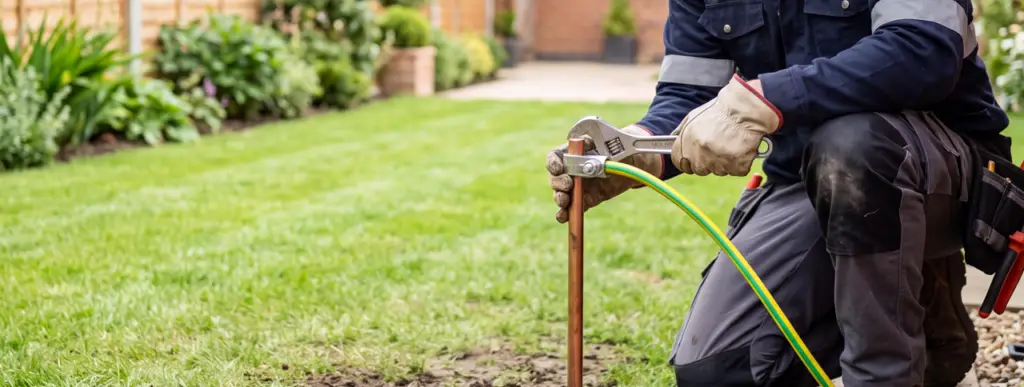
When homeowners hear the term electrical grounding, they usually picture a copper ground rod driven into the earth beside their home.
That ground rod is important, but it is only one part of a properly grounded and bonded electrical system.
At Kilowatt Electric LLC, we often find grounding and bonding issues in older homes, remodeled electrical systems, service upgrades, and work that has been modified over the years. Understanding the basics can help homeowners recognize why these components are so important to electrical safety.
Although the terms are often used interchangeably, grounding and bonding perform different jobs.
Grounding connects the electrical system to the earth through the grounding electrode system. Depending on the installation, this may include ground rods and other qualifying grounding electrodes.
Bonding connects conductive metal parts of the electrical system together and provides an effective path for fault current to return to the electrical source.
That distinction matters.
If a hot conductor accidentally contacts the metal housing of an appliance, electrical panel, junction box, or other grounded equipment, we want that fault current to have a low-impedance path back to the source.
That allows enough current to flow so the circuit breaker or other overcurrent protection can operate quickly.
This is one of the biggest misconceptions about residential electrical systems.
A ground rod’s primary purpose is not to carry ordinary electrical fault current through the earth so the breaker trips.
The earth normally has too much resistance to provide the effective fault-current path needed for that job.
Instead, the equipment grounding and bonding system provides the intentional metallic path back toward the electrical source.
Electrical Fault
↓
Metal Equipment or Enclosure
↓
Equipment Grounding Conductor
↓
Service Equipment
↓
Neutral-to-Ground Bond at the Service
↓
Grounded Service Conductor
↓
Utility Transformer
↓
Breaker Opens the Circuit
Meanwhile, the grounding electrode system connects the electrical service to earth.
Main Service Equipment
↓
Grounding Electrode Conductor
↓
Grounding Electrode System
↓
Ground Rod(s) / Other Required Electrodes
↓
Earth
These systems work together, but they don’t perform the same function.
Metal electrical equipment that could become energized needs an effective fault-current path.
Without proper bonding, a metal enclosure or appliance could potentially remain energized after a fault occurs.
Someone touching that equipment while also contacting another grounded surface could then become part of the electrical path.
Proper bonding helps ensure that when a significant ground fault occurs, the electrical protection operates as intended instead of leaving energized metal waiting for someone to touch it.
This is another area where we frequently find problems.
At the main service disconnect, the grounded conductor (neutral) and equipment grounding system are bonded as required by the electrical system design.
Downstream panels are different.
In a typical subpanel installation, the neutral conductors and equipment grounding conductors are kept isolated from each other.
Improperly bonding the neutral and ground again downstream can create parallel paths for normal neutral current and allow current to travel on metal parts that shouldn’t normally carry it.
That’s why simply seeing green or bare copper wires inside a panel doesn’t tell you whether the grounding and bonding system is correct.
Some problems we encounter include:
Some of these conditions aren’t obvious until the electrical system is properly inspected and tested.
That’s good, but it doesn’t tell the whole story.
Seeing a ground rod doesn’t confirm that:
Electrical safety depends on the complete system, not one component.
Consider having the electrical grounding and bonding system inspected if you’re:
Buying an older home
Older electrical systems may have been altered many times over the years.
Upgrading your electrical service
Service replacements are an excellent opportunity to evaluate the grounding electrode and bonding system.
Adding a generator or transfer equipment
Grounding and bonding become especially important when generators and transfer equipment are introduced.
Installing a subpanel or detached-building electrical system
These installations have specific grounding and bonding requirements.
Experiencing unusual electrical problems
Repeated electrical issues deserve proper troubleshooting rather than guesswork.
Unsure who performed previous electrical work
DIY and improperly modified electrical systems can contain grounding and bonding problems that aren’t immediately visible.
A ground rod is important, but proper electrical grounding and bonding goes much further than that.
The grounding electrode system, equipment grounding conductors, bonding connections, service equipment, grounded conductor, and overcurrent protection all have specific jobs.
When they’re installed correctly, they work together to create a safer electrical system.
When they’re not, the problem may remain hidden until an electrical fault occurs.
At Kilowatt Electric LLC, we believe electrical safety shouldn’t be based on assumptions. If you aren’t sure whether your home’s electrical system is properly grounded and bonded, have it evaluated by a qualified electrician.
Kilowatt Electric LLC
Serving Asheville, Arden, Buncombe County, Henderson County, and surrounding Western North Carolina communities.
⚡ Quality work. Safety first. Done right.